Article: Is It Time for a Perpetual Plaque Upgrade?
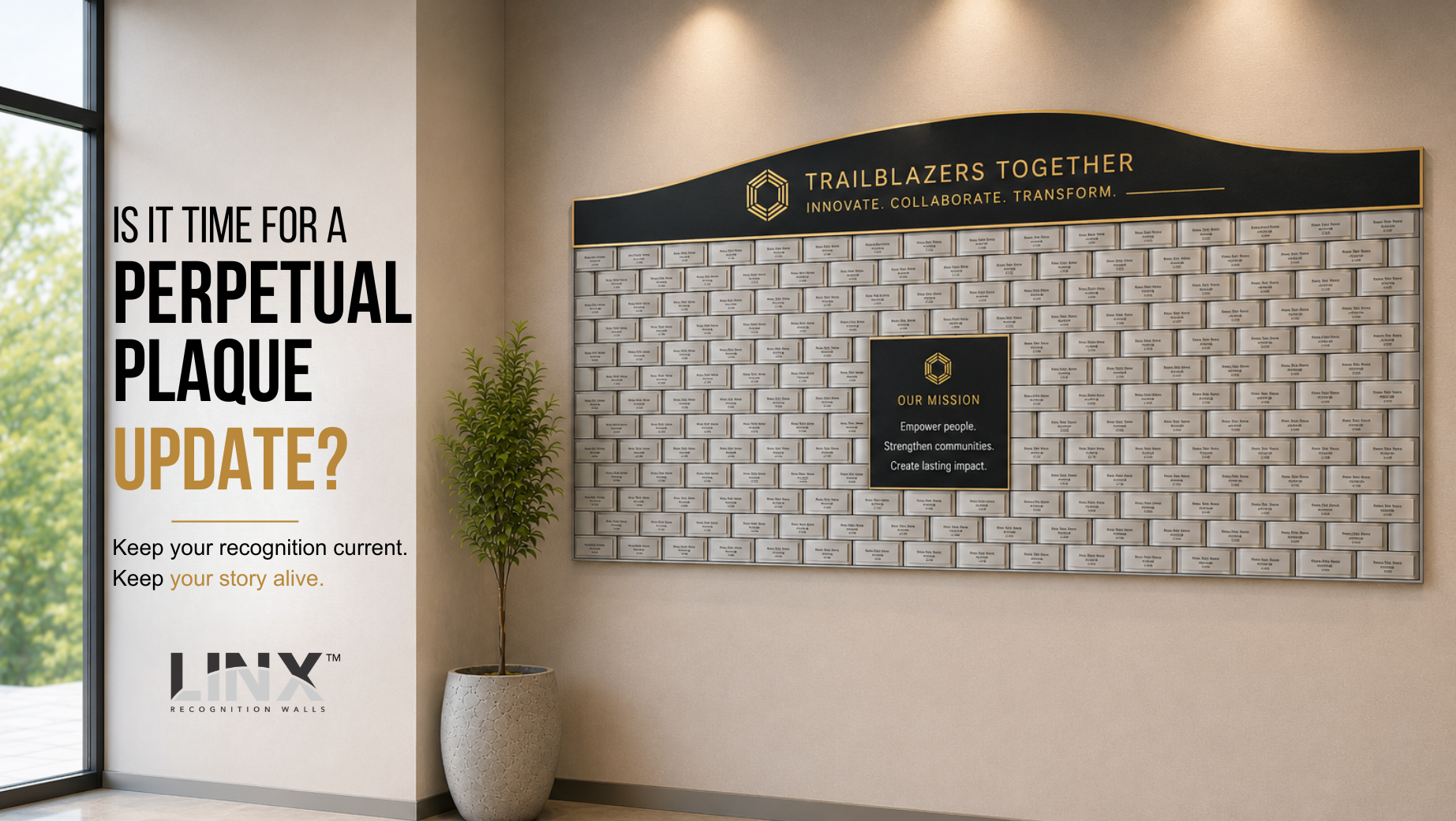
Is It Time for a Perpetual Plaque Upgrade?
For generations, perpetual plaques have been a trusted way to recognize achievement.
Employee of the Month. Years of Service. Hall of Fame. Sales Excellence. Donor Recognition.
Walk through almost any office, school, church, country club, hospital, or nonprofit, and you'll find them—engraved nameplates preserving the accomplishments of employees, volunteers, donors, students, and community leaders.
They've served organizations well.
But today's organizations have changed.
Recognition isn't just about recording names anymore.
It's about creating experiences that inspire people, reinforce culture, and tell your organization's story.
The question is no longer whether recognition matters.
It matters more than ever.
The question is whether your recognition display is helping people experience that recognition.
Public Recognition Should Be Seen
Walk into a thoughtfully designed building and you'll notice something immediately.
The architecture tells a story.
Natural light welcomes visitors.
Brand colors reinforce identity.
Every design choice contributes to the experience.
Recognition should do the same.
Too often, recognition displays are treated as something to install after everything else has been completed—a plaque mounted wherever wall space happens to be available.
But recognition deserves to be more than something attached to a wall.
It deserves to become part of the environment itself.
When recognition is integrated into a lobby, reception area, hallway, student commons, donor corridor, or athletic facility, it becomes part of the everyday experience.
It communicates what an organization values before anyone says a word.
Visibility Creates Meaning
Recognition only creates impact when people experience it.
Think about the places where people naturally gather.
Employees begin their day in the lobby.
Students walk through campus hallways between classes.
Donors attend fundraising events.
Patients and families wait in hospital entrances.
Visitors pass through reception areas.
These are the moments when recognition can do something extraordinary.
It can spark conversations.
Celebrate achievement.
Inspire participation.
Reinforce organizational culture.
Welcome future donors.
Encourage future leaders.
Recognition shouldn't disappear into the background.
It should become part of the organization's story.
Because what people see shapes what they remember.
Recognition Should Belong in the Architecture
Modern workplaces, schools, healthcare facilities, and community spaces are carefully designed to create memorable experiences.
Recognition should complement that design—not compete with it.
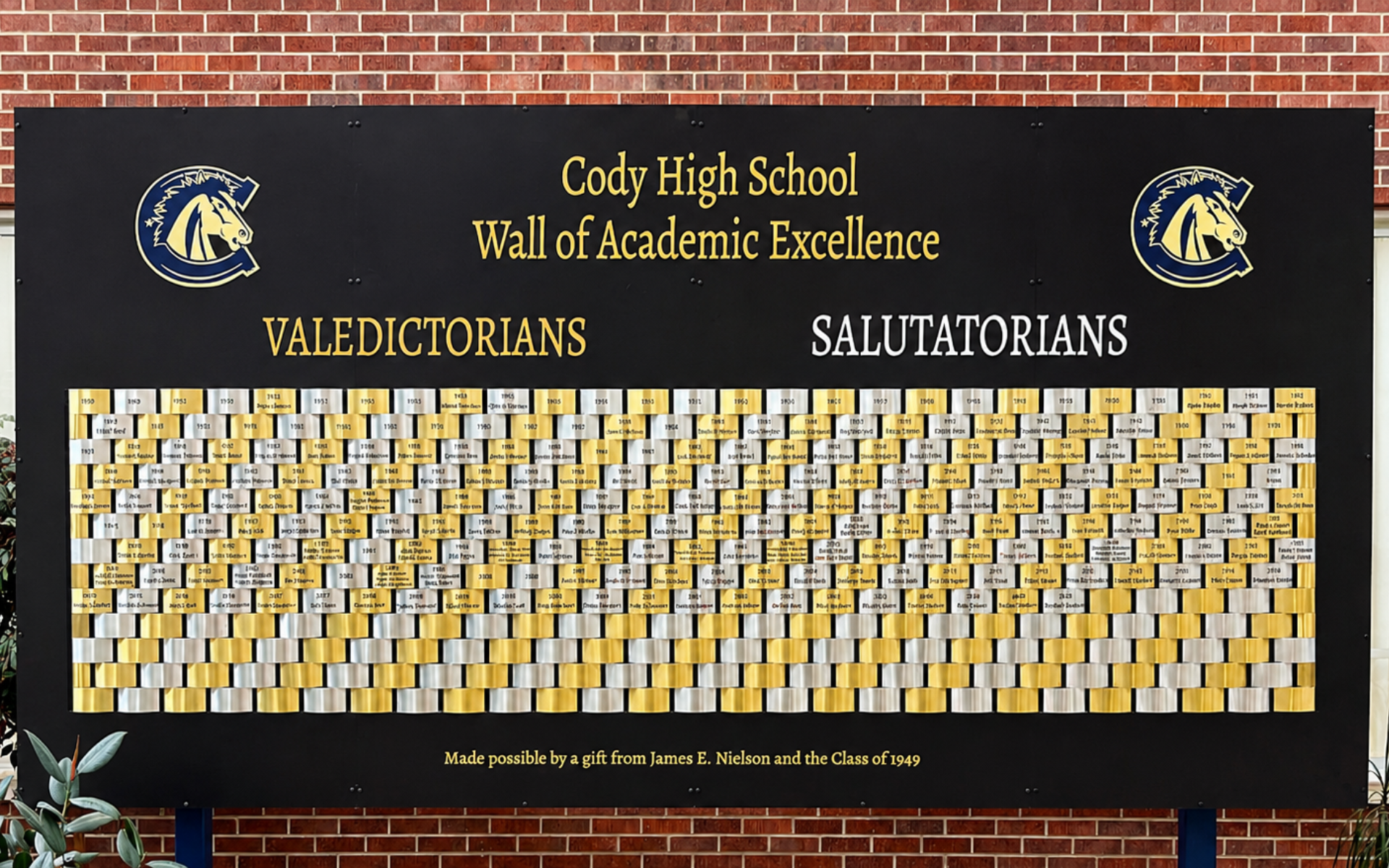
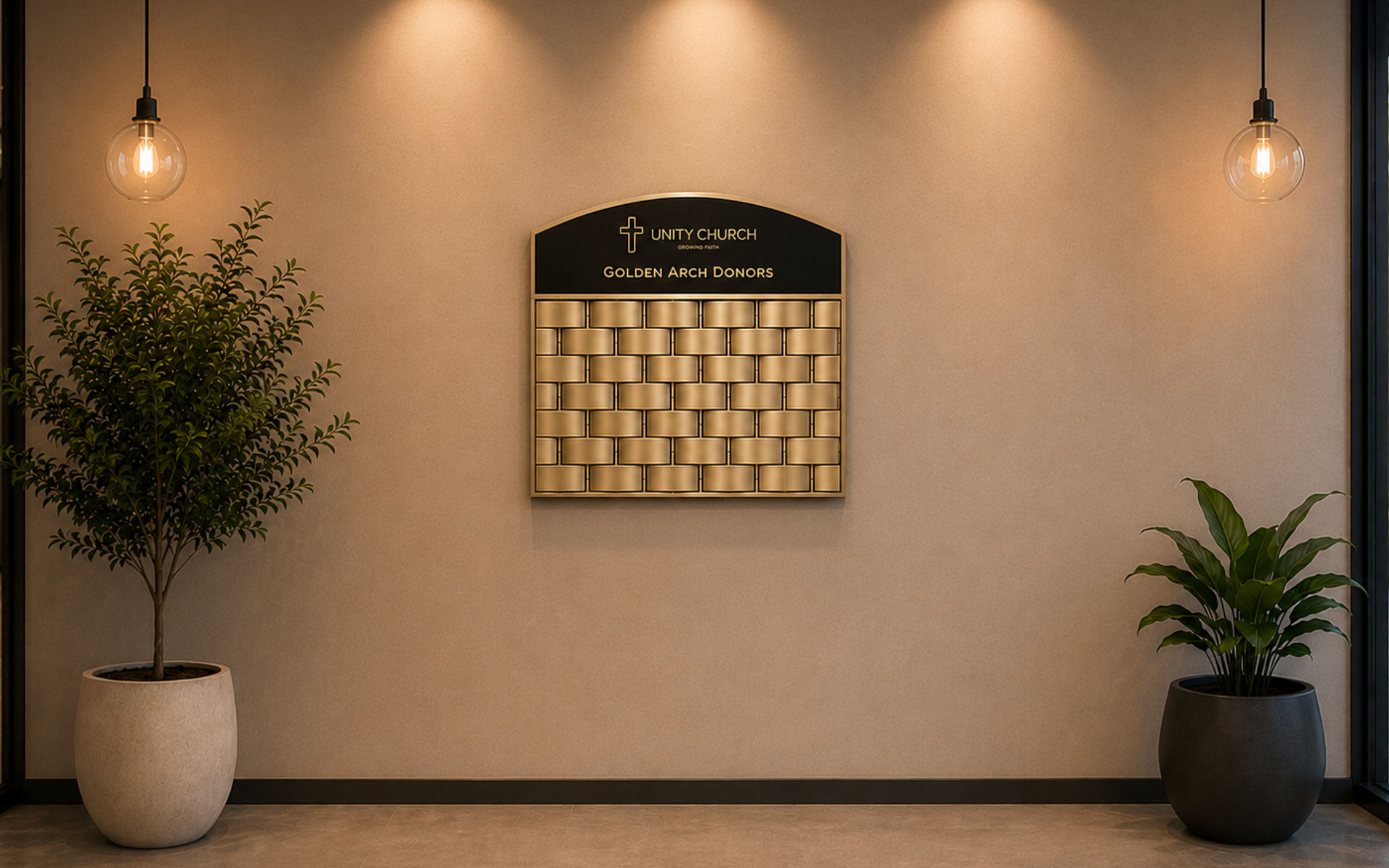
Rather than feeling like an add-on, today's recognition walls can become architectural features that naturally belong within the space.
A thoughtfully designed recognition wall doesn't simply display names.
It creates a destination.
It invites people to pause.
To reflect.
To celebrate.
To remember.
Instead of asking,
"Where can we hang this plaque?"
Organizations are beginning to ask,
"How can recognition become part of this space?"
That shift changes everything.
When Recognition Programs Grow
Organizations evolve.
New donors contribute.
Employees reach new milestones.
Programs expand.
Departments grow.
Recognition categories multiply.
The recognition display should evolve alongside them.
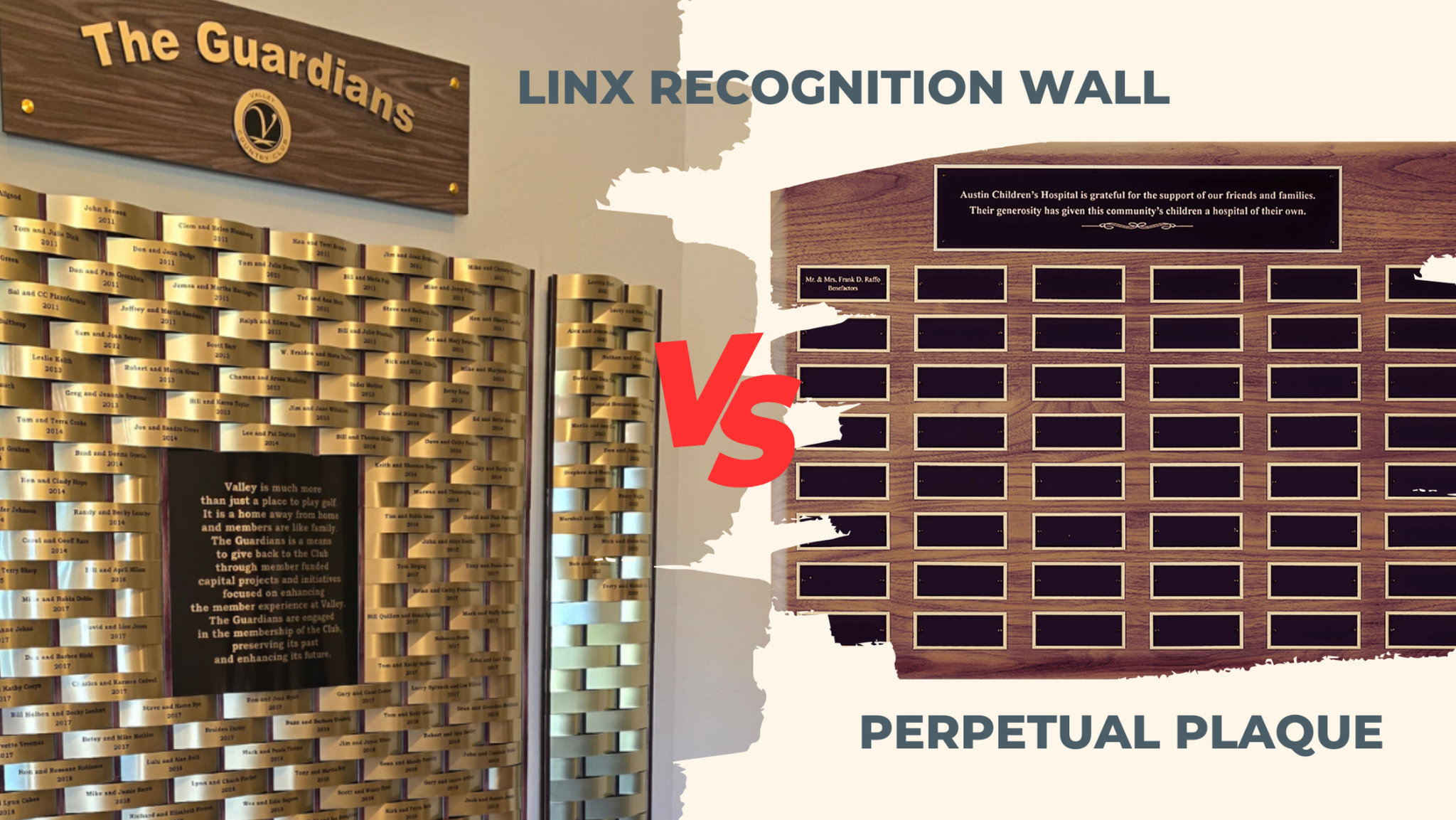
Traditional perpetual plaques often reach a point where organizations must choose between replacing the entire display, adding another plaque beside it, or beginning a new collection elsewhere.
Over time, what began as a single recognition display can become several unrelated plaques scattered throughout a building.
Modern recognition systems offer a different approach.
Instead of starting over, organizations can expand their recognition display while maintaining a cohesive design that continues telling one unified story.
Recognition grows alongside the organization—not separately from it.
Of course, every organization's needs are different. Traditional perpetual plaques continue to serve many recognition programs well, particularly those with smaller or more static displays. If you're comparing the strengths of each approach—including design, expandability, maintenance, and long-term flexibility—explore our Recognition Walls vs. Perpetual Plaques: Complete Comparison Guide to help determine which solution best fits your organization.
Designing Recognition with the Future in Mind
Today's recognition displays are about much more than preserving history.
They're about creating visibility for the future.
Modern recognition systems combine:
-
Expandable recognition panels
-
Interchangeable nameplates
-
Branded headers
-
Multiple recognition categories
-
Flexible layouts
-
Architectural integration
Rather than replacing an entire display when space fills, organizations can continue building upon a recognition environment that evolves over time.
The result is a display designed not just for today's achievements—but for tomorrow's as well.
Where Public Recognition Makes the Greatest Impact
Every recognition program deserves a place where it can be seen, appreciated, and remembered.
Some of the most effective locations include:
|
Recognition Program |
Ideal Location |
|
Years of Service |
Main Lobby or Employee Entrance |
|
Employee Excellence |
Reception Area or Office Hallway |
|
Donor Recognition |
Lobby, Donor Corridor, or Event Space |
|
Academic Achievement |
Student Commons or School Entrance |
|
Hall of Fame |
Athletic Facility or Campus Entrance |
|
Volunteer Recognition |
Church Lobby or Community Center |
|
Leadership Recognition |
Executive Reception Area |
|
Scholarship Recognition |
University Welcome Center |
The goal isn't simply finding an empty wall.
It's choosing a space where recognition naturally becomes part of the organization's daily experience.
Recognition Should Grow with Your Organization
The strongest recognition programs aren't static.
They're living reflections of the people who continue shaping an organization's story.
As organizations grow, recognition should grow with them.
Not only by adding new names, but by creating spaces that continue inspiring future employees, students, donors, volunteers, and visitors.
Recognition should be flexible.
Visible.
Integrated.
Designed to last.
Most importantly, it should belong where people gather.
Because that's where recognition has the greatest opportunity to make a lasting impression.
Ready to Create a Recognition Environment?
The LINX Recognition Walls family is designed to help organizations move beyond traditional recognition displays and create meaningful recognition environments that grow alongside their mission.
Whether you're honoring employees, donors, volunteers, students, alumni, or community leaders, LINX Recognition Walls combine architectural design, flexible layouts, and expandable recognition systems that become a lasting part of your space.
→ Explore the LINX Recognition Walls