
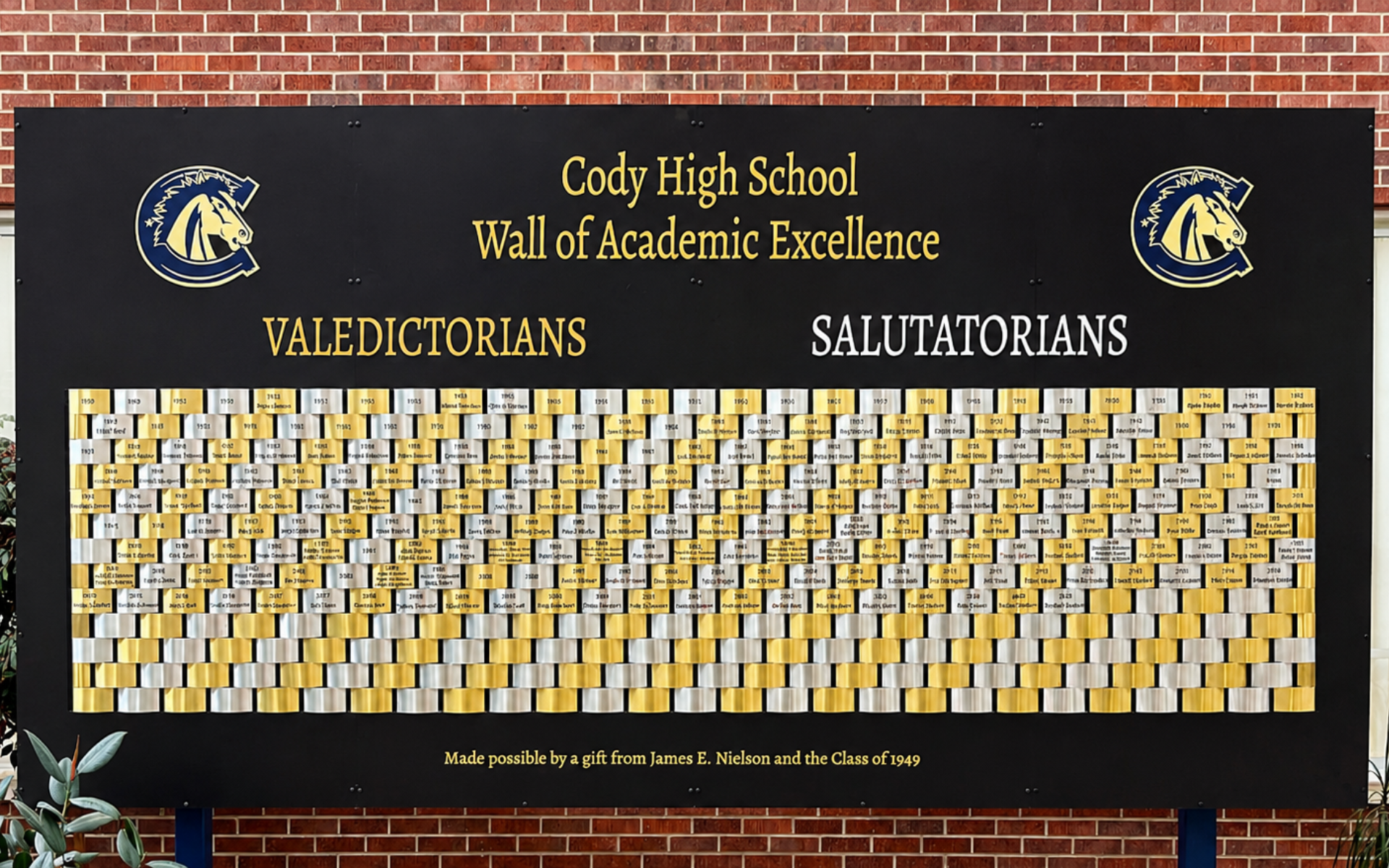
The Wall That Started It All
In 2017, a customer approached us with a vision: create a donor recognition display unlike anything they had seen before. What began as a project to honor more than 200 donors became the foundation of an entirely new recognition system. This installation introduced the dimensional design that would eventually become LINX Recognition Walls.

The Story of LINX
Every innovation begins with a challenge.
In 2017, a customer approached us with a vision: create a recognition display that would honor more than 200 donors in a way that felt significant, permanent, and worthy of the people it celebrated. Traditional donor walls felt flat and predictable. We knew there had to be a better way.
The breakthrough came with a simple question: What if recognition could have dimension?
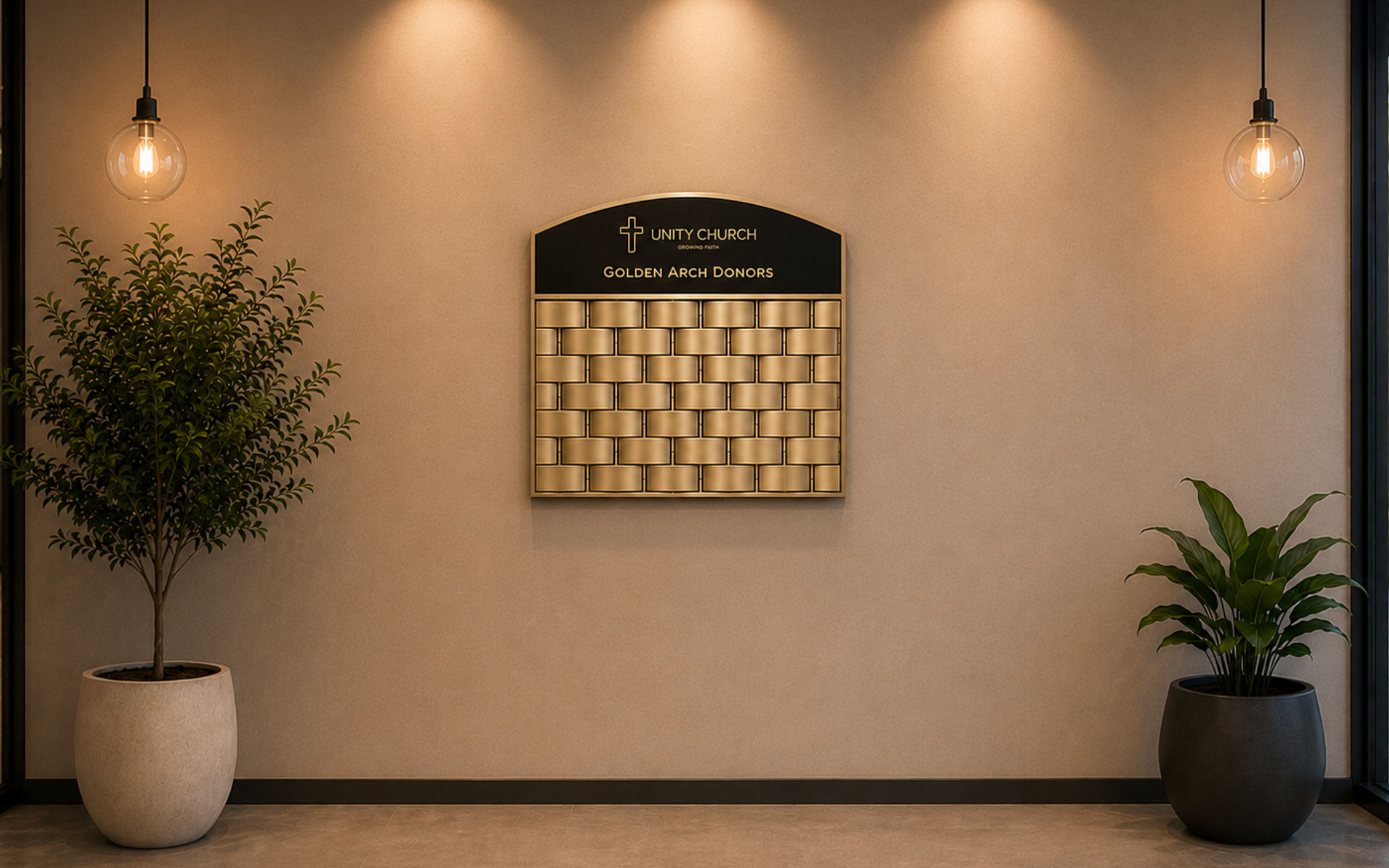
By bending and layering the nameplates, we created depth, movement, and visual interest unlike anything we had produced before.
The result was an 11-foot recognition wall that transformed a list of names into an architectural feature. That project became the very first LINX wall.
Over the next several years, we created additional walls for organizations that wanted something more more meaningful than a traditional plaque. With every installation, we saw new possibilities.
We often found ourselves saying, "There is so much more we can do with LINX."
In 2024, we decided to fully embrace that vision.
We challenged ourselves to think beyond a single product and imagine an entire recognition system. That exploration led to the creation of the Grid Series, followed by MicroLINX and ModLINX—each designed to bring the same flexibility, beauty, and expandability to different spaces and applications.
Yet we believe we are only at the beginning.
The most exciting part of LINX is not what we have already created. It is what comes next. Every customer brings new ideas, new challenges, and new ways to celebrate achievement. Their creativity continually pushes us to expand what LINX can become.
LINX was born from imagination, but its future will be shaped by the organizations that use it.
Together, we are redefining what recognition can look like.